
Search
-
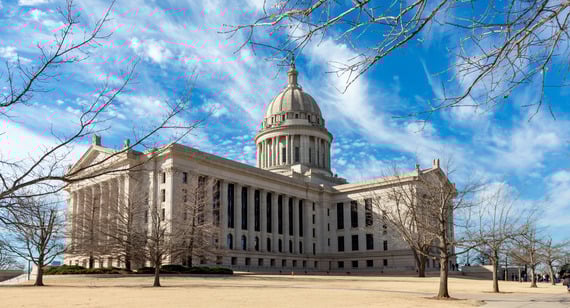 February 5, 2026Now that 2026 is well underway, we are taking stock of key accomplishments for the Church in Oklahoma over the past year. Of the thousands of bills introduced each year in the state legislature, only a small fraction receive the governor’s signature. In 2025, three of those bills originated with the Catholic Conference of Oklahoma.
We passed Senate Bill 1027, which added several critical regulations to the petition-circulation process for state questions, including a requirement that signatures be gathered across multiple counties outside the Oklahoma City and Tulsa metros. Additionally, the bill imposes stricter regulations on the hiring of paid circulators to prevent out-of-state firms from descending on Oklahoma for political and financial gain. These provisions primarily are aimed at heavily funded pro-abortion organizations that have successfully overturned longstanding abortion regulations via ballot initiatives in other states and have had Oklahoma in their crosshairs for years. The new law is currently awaiting a decision from the Oklahoma Supreme Court after being challenged by some of these groups.
Another critical victory came with Senate Bill 658, which created an additional religious-liberty protection for foster and adoptive parents. In recent years, several states have discriminated against parents with traditional religious convictions by barring them from participation in state foster-care programs. In Oklahoma, thousands of foster children remain in need of a “forever family,” and pairing them with a home is already an arduous process. This new law preempts state officials from imposing discriminatory religious conditions on prospective foster and adoptive parents.
A third key win added momentum to our efforts to expand school choice in Oklahoma. House Bill 1096 inserted the Classic Learning Test (CLT) alongside the ACT and SAT as an accepted option for college entrance testing. CLT has grown rapidly in recent years, particularly in states like Florida, as private-school and homeschooling families prefer its emphasis on classical reading and civics. Colleges and universities nationwide are increasingly offering scholarships to CLT test-takers, with the University of Tulsa being one local example. As the ACT and SAT have faced growing criticism for lowering standards, CLT has held the line on rigor and quality.
Finally, our effort to reinstitute a moratorium on Oklahoma’s death penalty cleared an important hurdle with the passage of Senate Bill 601 from Senate committee. Earlier in 2025, the U.S. Supreme Court vacated the murder conviction of Richard Glossip, citing false testimony and prosecutorial misconduct. Glossip’s death-row conviction is now the 12th to be overturned or vacated in Oklahoma since the death penalty was reinstated in 1976. With just over 120 executions carried out in that time, the state faces an error rate approaching 10 percent. As Archbishop Coakley has argued, this is grossly inconsistent with the Church’s ethic of life. We will continue our efforts on SB 601 in the upcoming session.
The 2026 legislative session begins Feb. 2, and with this year’s election cycle already in full swing, it promises to be particularly consequential. Among our legislative priorities:
Senate Bill 1398, which proposes a robust state income-tax credit for donations to pregnancy resource centers and other pro-family ministries and organizations. We have long argued that ending abortion and supporting women in crisis are two sides of the same coin. It is time to align public policy with that conviction by creating greater incentives for increased funding of life-affirming support.
Additionally, we are working closely with Senate and House leaders to strengthen state statutes in ways that would effectively block the manufacture and distribution of abortion pills across state lines. The so-called “one-pill” solution is rapidly becoming an epidemic, as young women are enticed to purchase misoprostol – often from overseas sources – which, when ingested, induces a miscarriage. The abortive nature of this trend is egregious, but so too are the lasting physical and psychological harms to mothers. Increasingly, the abortion industry exploits its vulnerabilities for financial gain.
Senate Bill 1307 proposes to strike several prohibitions on state funding for religious organizations. In the wake of the Saint Isidore case at the U.S. Supreme Court, Gov. Kevin Stitt’s office identified multiple provisions in state statute that are plainly discriminatory, barring religious organizations from partnering with the state. We aim to remove these barriers.
Finally, statewide elections are approaching this November, with primaries scheduled for June. With Gov. Stitt’s second term coming to an end, the governor’s mansion, attorney general, state superintendent and other key offices will be open. We expect this cycle to be the most expensive in state history, and the outcomes of these races will shape Oklahoma’s direction for years to come. That is why it is essential to pay close attention and take the time to research candidates carefully. The Church calls us to be “faithful citizens,” prayerfully holding public officials and candidates accountable to principles of moral governance. Resources for Forming Consciences for Faithful Citizenship are available at USCCB.org.
Brett Farley is the executive director for the Catholic Conference of Oklahoma.