
-
 November 20, 2025
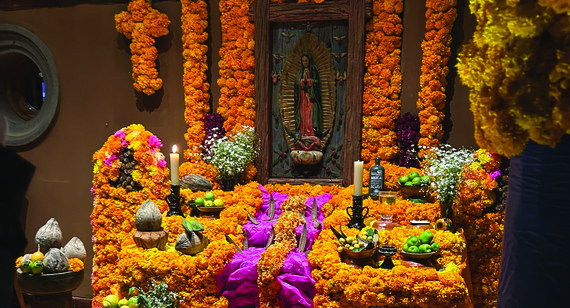
The idea sounded good to make a trip to Mexico to attend Día de Muertos – the Day of the Dead – a celebration rooted not in fear of death, but in the faith that love transcends it. And it was, although not without some twists and turns.
First came a long day of travel, nerve-racking enough to make me question the trip entirely. Arriving in Morelia, Michoacán, Mexico, I suddenly felt the weight of being in a foreign country where I couldn’t speak the language. Moving through security checkpoints, immigration and customs I had no idea what waited for me on the other side.
After a full bag search and clearing customs, I stepped out to find that my transportation was nowhere in sight. For the first time in a long while, fear began to set in. It was the kind of fear that strips away confidence, reminding you how fragile you are when surrounded by voices you can’t understand.
Finally, I asked a police officer for help. He spoke little English, but understood when I showed him the picture of the company I was looking for. Eventually, I was on my way, ultimately arriving at my resort feeling exhausted, disoriented and grateful. The only thing I felt was relief.
That night, colleagues persuaded me to go to dinner in Morelia’s city center. It was Halloween, and the streets were shoulder-to-shoulder with children in costumes, musicians, families celebrating and vendors filling the air with the smell of fresh cooked tamales, quesadillas and tacos.
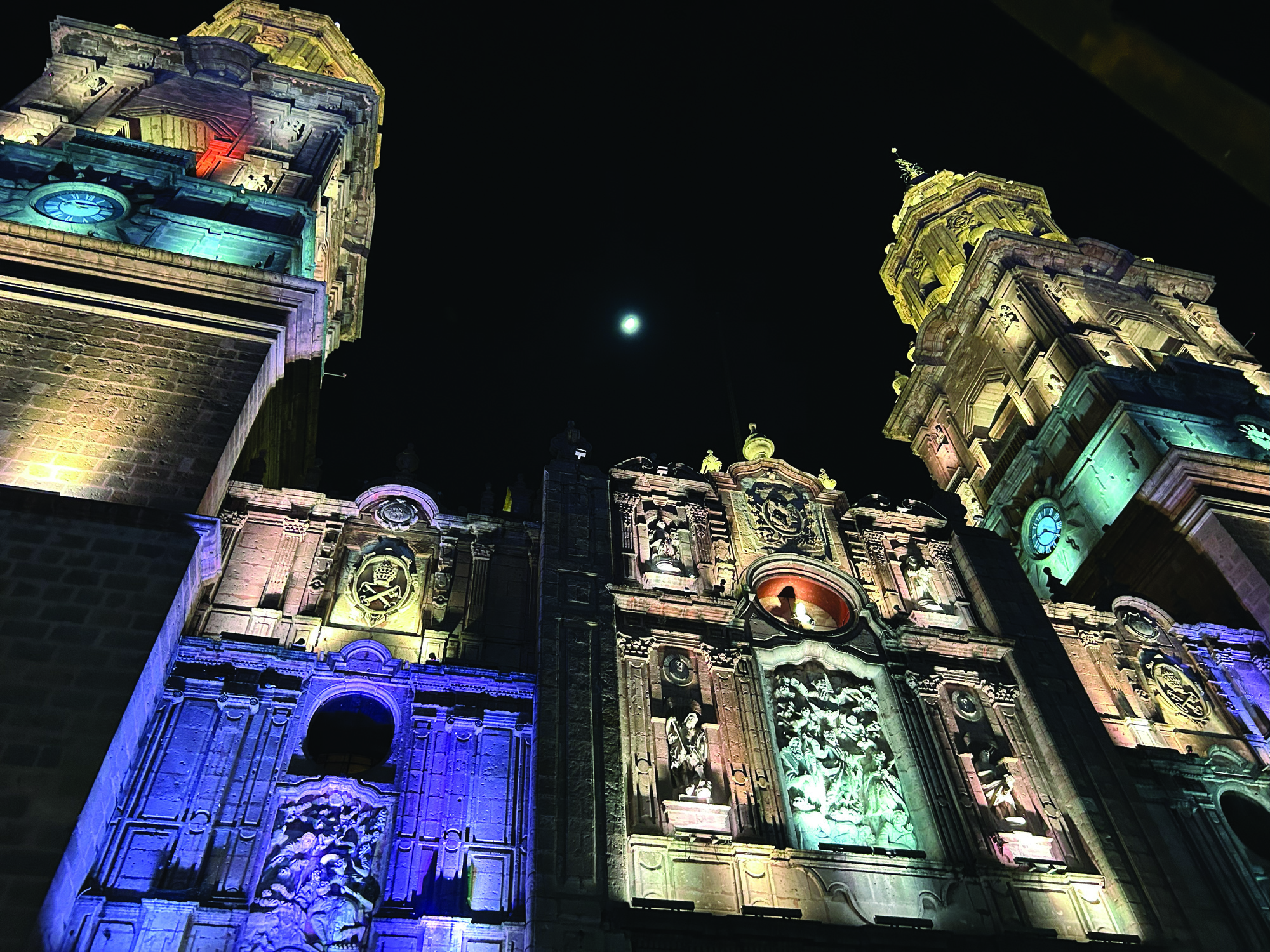
We visited the cathedral, where Masses were celebrated nearly every hour on Sundays. The crowd was astonishing, the energy electric, and yet beneath the surface I could feel something deeper: the anticipation of Día de Muertos. It had been a long travel day, but it was the beginning of something that would change how I see death, grief and remembrance forever.
On Saturday we gathered for lunch and calavera face paintings before setting out for what was called The Night of the Souls. On the way, our bus wound through small towns where daily life seemed frozen in time.
As we approached Tzintzuntzan and stepped out of the bus we stepped directly into the heart of the celebration. We had arrived at a large open area outside of the city’s main drive where families were blessing floral arches. While walking through the courtyard we witnessed many Comparsas – costumed singers, musicians and dancers – who were headed in the direction of the cemetery. Once we had arrived through massive crowds of people celebrating and dancing and taking in all the sights and sounds, we finally arrived at the entrance of Panteon de Tzintzuntzan (Cemetery of Tzintzuntzan).
It was the beginning of what we had been anticipating: Noche de Muertos.
No photograph could capture the sights in those cemeteries. The air was thick with incense, smoke and the fragrance of thousands of marigolds and candles. Every grave was a masterpiece — some simple, some ornate, but each glowing with hundreds of candles flickering in the night.
Bands played in the distance and within the cemetery, fireworks exploded overhead all in remembrance of the souls that were believed to return that sacred night. At one graveside, musicians danced, played music and handed out beers as we went by — not in irreverence, but in celebration. It was joy intertwined with grief, laughter threaded through tears. This was a fusion of Aztec ancestry and Catholic faith — a theology lived, not preached.
Here, death was not denied or hidden away. It was embraced, sanctified and transformed. The faithful were not mourning as those without hope. They were proclaiming, in candlelight and song, that love never dies.
As we traveled back to the lakeside resort we paused for dinner and drinks before moving on to the next few cemeteries. The next cemeteries were on islands in Lake Patzcuaro. We traveled by boat from island to island in a country where OSHA did not exist. There were no handrails on the docks leading to the boats, no emergency lights, and definitely not enough life jackets on board for the occupied amount. Yet there was no fear in their eyes. Only pride, reverence and the rhythm of faith.
On the island of Yunuen, the cemetery was small, maybe an acre or two, yet filled with people. When we arrived, a band was playing. Moments later, the music stopped as the priest began Mass beneath the open sky. The families prayed, children played and candles burned on every side.
The next stop: Pacanda Island. We climbed steep paths in the darkness, hearing only the distant bells and the hum of the boat below. At the top, the night opened into a field alive with celebration: dancing, singing, praying — all at once. We passed by little shacks, houses and sleeping areas with dogs barking at every passing. Bells rang, rosaries murmured, guitars strummed. It was as if heaven and earth had agreed, for one night, to meet in the middle.
Then we reached the final cemetery, Panteon Pacanda — the most peaceful of all. The glow from thousands of candles illuminated the marigolds like a living fire. Vendors sold bread, candles, flowers, cerveza and candy, but no one was there for profit. No marketing campaign, no sponsorship, no fanfare. Just love, simple, poor, sincere love. I realized then that remembrance doesn’t require wealth. It requires heart. These families, many with almost nothing, give everything to honor those they love. They teach us what it means to remember not as an event, but as a vocation.
The next morning, we learned that some communities, like Pátzcuaro, attract tourists and outside funding from the state tourist board which makes their altars larger and their streets more crowded. The islands we visited on the other hand receive no such attention. Their devotion is private, family-built and deeply spiritual. They do it not for show, not for commerce, but because it is who they are.
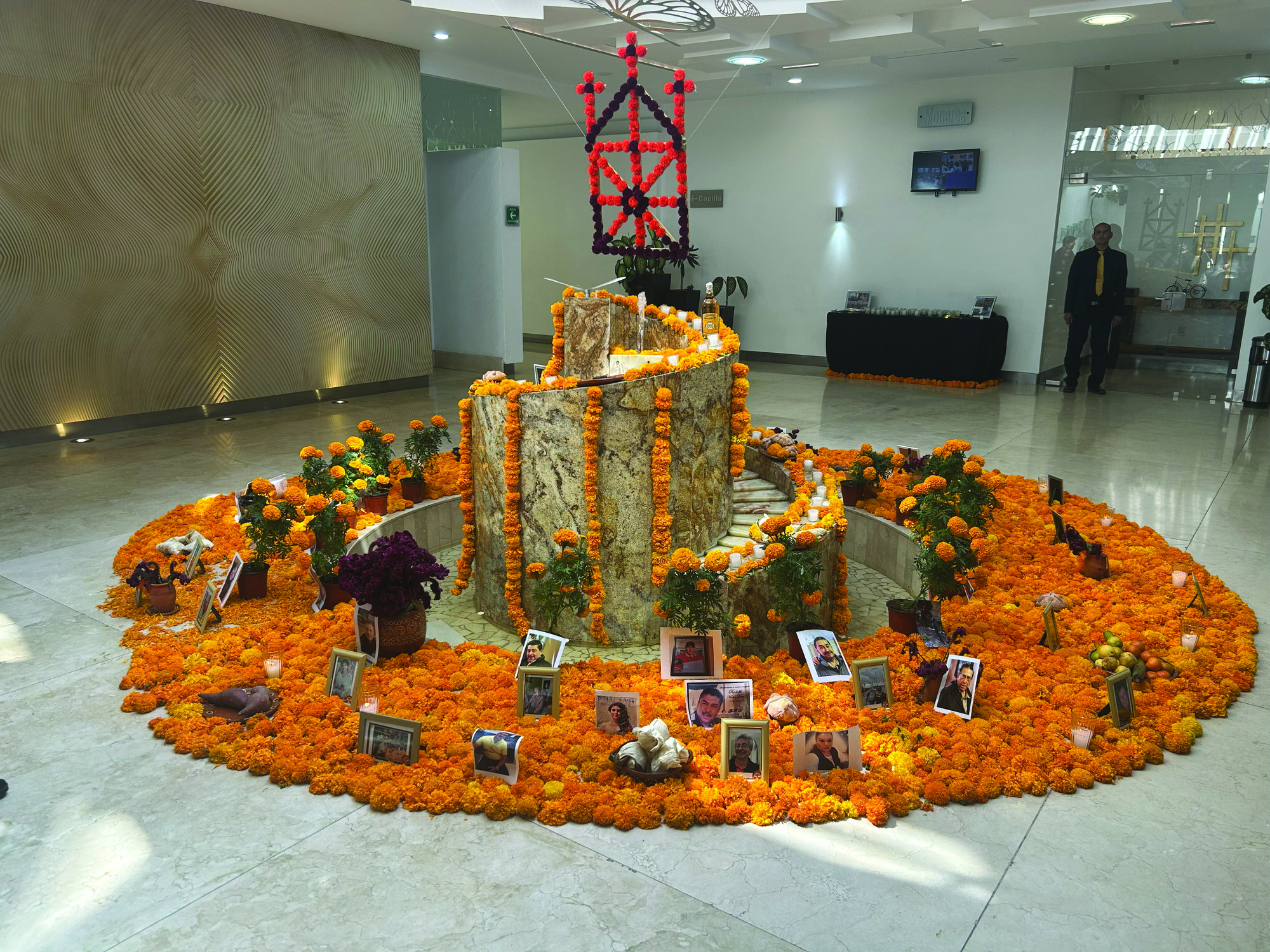
Our guide explained that for the Purépecha people, the lake itself is sacred, a portal between the worlds where their loved one’s travel through to visit and have those family reunions. The marigold arches symbolize the gateways between heaven, earth and the underworld. Monarch butterflies, arriving each year around the same time, are believed to be returning souls; a family reunion written in wings and wind.
Later that afternoon, back in Morelia, the tone shifted a bit. As we traveled through Morelia Square near the cathedral to visit the numerous ofrendas and tapetes, there was a calm protest going on. We asked the guide what it was about and he said, “Oh maybe something about the laborers demanding fair treatment and justice.” Our guide brushed it off as if it happened all the time.
We continued the tour and after it completed, we went to the market. As I made my way back toward the cathedral after the market with some colleagues, we noticed smoke and a lot of noise in between the cathedral and the state government buildings. The protest had turned violent as protestors broke into the Palacio de Gobierno de Michoacán (the Government Palace of Michoacán).
As crowds ran towards us, they were holding shirts over their mouths and wiping their eyes. I was just across the street, caught suddenly in the cloud of gas. My throat burned, my eyes stung, and my heart raced. Through the chaos I found my colleagues and we ran to the restaurant that we had planned on having supper. They shut the doors behind us, sealing out the sting of gas. Inside, strangers comforted one another, eyes red, voices hoarse, we waited.
The protests had erupted in grief and anger after the assassination of Uruapan’s mayor the night before, killed by the cartels as he attended Día de Muertos event with his family. Within 30 minutes, the city exhaled. The restaurant reopened its windows as if nothing had happened. The people of Morelia had returned to what they know best — endurance. Life went on.
That night, as we shared dinner, I thought about how these same people who celebrate their dead with such beauty also live with constant fear, of corruption, of violence, of systems that fail them. And yet, in that fear, they remain faithful. They choose beauty anyway. They choose remembrance anyway. They choose to love anyway.
As I flew home, I kept thinking of those cemeteries. The glow of candles across the lake. The smell of incense. The marigolds bright as the evening sun. The Night of the Souls had shown me that faith and poverty are not opposites. In Michoacán, they coexist in a sacred harmony.
For those of us who serve the Church through Catholic cemeteries, this is the essence of our ministry. We are not merely stewards of land; we are caretakers of memory, midwives of hope.
The families of Michoacán, living with so little, reminded me that the greatest act of mercy is not in marble or bronze, but in presence — in the simple act of showing up at the grave, again and again, with faith that love endures beyond death.
The people of Michoacan taught me something no conference session or policy manual could: that holiness often begins where the world sees little worth and takes root in places it deems insignificant.
I also prayed that our cemeteries, too, might be places where fear gives way to faith, where remembrance burns bright, and where, like those families in Michoacán, we never forget that the soul is never truly gone.
 Photos Branden Seid.